
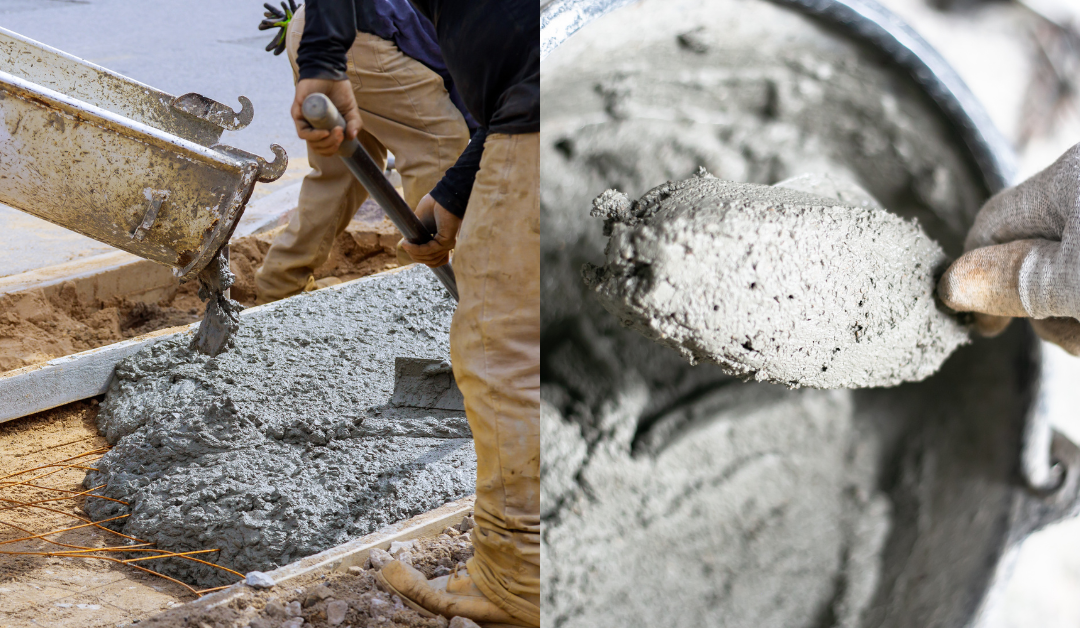
The terms concrete and cement are often used interchangeably, but they refer to two different materials with distinct roles in construction. Understanding the difference between the two is important for anyone planning a project or maintaining existing surfaces. The topic of concrete vs cement goes beyond terminology. It helps explain how materials function, why certain choices are made, and what contributes to long-term durability.
Whether you are looking at a driveway, patio, walkway, or structural surface, knowing how these materials work together provides a clearer understanding of how concrete performs over time.
What Cement Is and How It Works
Cement is a fine powder made from limestone, clay, and other minerals that are heated and processed into a binding material. When mixed with water, cement forms a paste that hardens over time through a chemical reaction.
On its own, cement does not have the strength or durability needed for most construction surfaces. It is best understood as one component within a larger system. This is a key point when discussing concrete vs cement, since cement is not typically used by itself for structural applications.
Instead, cement acts as the glue that binds other materials together.
What Concrete Is Made Of
Concrete is a composite material made by combining cement with water, sand, and aggregate such as gravel or crushed stone. Each of these components contributes to the final performance of the material.
The cement binds the mixture together, while the aggregate provides strength and reduces shrinkage. Water activates the chemical reaction that allows the material to harden and gain strength.
This combination is what gives concrete its durability and versatility. When comparing concrete vs cement, it becomes clear that concrete is the complete material used in construction, while cement is only one part of that system.
Why Cement Alone Is Not Used for Surfaces
Cement by itself would not perform well as a finished surface. It tends to shrink significantly as it cures, which can lead to cracking. It also lacks the structural strength needed to support weight or withstand environmental conditions.
Concrete solves these issues by incorporating aggregate, which stabilizes the material and improves its ability to handle stress. This is why surfaces such as driveways, patios, and sidewalks are built with concrete rather than cement alone.
Understanding this distinction is central to the concept of concrete vs cement and explains why the two materials cannot be used interchangeably in practice.
Strength and Load-Bearing Performance
Concrete is designed to handle weight and distribute loads evenly across its surface. The aggregate within the mixture helps resist compression and prevents excessive movement within the slab.
Cement contributes to this strength by binding the materials together, but it is not responsible for the load-bearing capacity on its own. When evaluating concrete vs cement, it is important to recognize that concrete’s strength comes from the combination of all its components.
This is what allows concrete surfaces to support vehicles, foot traffic, and structural loads over long periods of time.
The Role of Curing in Concrete Performance
Curing is the process that allows concrete to develop its full strength after it is poured. During curing, moisture is retained within the material so the cement can continue to hydrate and harden.
Proper curing is essential for achieving durability and preventing early surface issues. Cement alone hardens quickly, but concrete continues to gain strength over time as the curing process progresses.
This difference highlights another key aspect of concrete vs cement. Concrete is designed to evolve and strengthen after placement, while cement is simply one ingredient within that process.
Practical Applications in Construction
Concrete is used in a wide range of applications, including driveways, walkways, patios, steps, ramps, and foundations. Its versatility and durability make it one of the most common materials in both residential and commercial construction.
Cement is used within concrete and also in mortar, which is applied in brick and block construction. However, it is not used on its own for surfaces that require strength and longevity.
Looking at these real-world uses helps clarify the difference between concrete vs cement and why each material serves a specific purpose.
Resistance to Weather and Environmental Conditions
Concrete is designed to withstand environmental exposure, including temperature changes, moisture, and daily wear. When properly installed and maintained, it performs well in a wide range of conditions.
Cement alone does not offer the same level of resistance. Without aggregate, it is more susceptible to cracking and surface damage when exposed to environmental stress.
This distinction is another important factor in understanding concrete vs cement, especially for outdoor surfaces that must endure seasonal changes.
Maintenance and Longevity
Concrete surfaces require relatively simple maintenance to remain in good condition. Routine cleaning, proper drainage, and occasional sealing help protect against moisture and surface wear.
Cement-based materials used incorrectly would require more frequent attention and would not provide the same long-term reliability.
When considering concrete vs cement, the durability of concrete makes it the preferred choice for projects that require lasting performance with minimal upkeep.
Common Misunderstandings
Many people refer to concrete surfaces as cement, which can create confusion. While the terms are often used casually, they are not technically interchangeable.
Recognizing the difference between concrete vs cement helps improve communication and ensures that projects are discussed and planned accurately.
This understanding also helps property owners make more informed decisions about materials and maintenance.
Why the Difference Matters
Understanding how concrete and cement function allows property owners to better evaluate construction methods and long-term performance. It also helps set realistic expectations for durability and maintenance.
Concrete is engineered to provide strength, stability, and longevity, while cement plays a supporting role within that system. Recognizing this relationship is key to understanding concrete vs cement in a practical way.
Long-Term Value of Concrete
Concrete offers strong long-term value because of its durability and ability to withstand environmental conditions. When installed and maintained properly, it can last for decades with minimal repairs.
Cement alone cannot provide the same level of performance, which is why it is used as part of a mixture rather than as a finished material.
This difference reinforces the importance of understanding concrete vs cement when planning or maintaining any surface.
Different Roles in Construction
Concrete and cement are closely related but serve different roles in construction. Cement is a binding ingredient, while concrete is the complete material used to create durable, long-lasting surfaces.
Understanding concrete vs cement helps clarify how materials function, why certain methods are used, and what contributes to reliable performance over time. With this knowledge, property owners can approach projects with greater confidence and a clearer understanding of what makes concrete such a dependable choice.
Stay up to date with the latest at Austill Construction by liking us on Facebook